Best Hardware for Homelab Server 2026: The Ultimate Build Guide
We’ve officially entered a new era of advanced self-hosting and localized cloud computing. Because of this, pinning down the best hardware for homelab server 2026 has become a top priority for tech enthusiasts, DevOps engineers, and IT professionals alike. With software demands scaling up at a breakneck pace, your physical infrastructure simply has to keep up with the times.
Whether you’re upgrading an existing rig or building a home server from scratch, you need plenty of planning and foresight. The goal is to find components capable of juggling heavy Proxmox virtualization, dense containerization, and even demanding AI workloads—all without making your monthly electricity bill skyrocket. In modern IT environments, future-proofing isn’t just a buzzword; it’s the name of the game.
Throughout this guide, we’ll walk through the ideal compute, storage, and networking choices to set you up for the years ahead. It doesn’t matter if you’re spinning up a basic media server or orchestrating a complex Kubernetes cluster—we’ve got the hardware recommendations to help your setup thrive.
Why Finding the Best Hardware for Homelab Server 2026 is Challenging
Pinning down the perfect hardware is no walk in the park, largely because software requirements are evolving faster than ever. When a homelab becomes obsolete, the usual culprits are processing bottlenecks and strict memory ceilings. In fact, a server put together just five years ago might already be breaking a sweat trying to run modern self-hosted applications.
On top of that, today’s workloads require a serious amount of dedicated compute power. Whether you’re running local Large Language Models (LLMs) or deploying intricate DevOps tools, the stakes are higher. We aren’t just hosting simple file servers anymore; we’re managing resource-hungry hypervisors like VMware ESXi and Proxmox that demand smart, robust resource allocation.
Finally, we have to consider the rapid industry shift toward next-generation hardware standards. The widespread move to DDR5 memory and PCIe Gen 5 NVMe drives is completely reshaping the foundational landscape. If you sink your money into aging architectures today, you’re almost guaranteed to run into frustrating upgrade bottlenecks down the road.
Quick Fixes: Entry-Level and Budget Hardware Solutions
Not everyone needs an expensive, enterprise-grade rack right out of the gate. If you’re just dipping your toes into the hobby or simply need a low-power compute node, you have plenty of affordable options. Here are a few practical ways to build an entry-level homelab that will easily carry you through to 2026 and beyond.
- Mini PCs (1-Liter Form Factor): Tiny machines rocking Intel N100, N305, or Ryzen 7000 series chips are absolutely incredible for building micro-clusters. They draw very little power, yet they pack more than enough cores to comfortably run dozens of Docker containers.
- Refurbished Tiny-Mini-Micro Nodes: Breathing new life into retired corporate desktops—think Dell OptiPlex or Lenovo ThinkCentre units—is still one of the most cost-effective strategies out there. Max out their DDR4 RAM, and you’ve got an instant, budget-friendly virtualization host ready to go.
- Consumer NAS Devices: If you mainly need basic storage, picking up a pre-built NAS from brands like Synology or QNAP is a quick, highly reliable solution. Just make sure the model you choose features an expandable RAM slot and native 2.5GbE networking to handle future network upgrades.
- Leverage Intel QuickSync: Is a dedicated media server your primary goal? If so, you should definitely opt for Intel processors with integrated graphics. Their QuickSync technology delivers unmatched hardware transcoding performance while barely sipping any power.
Advanced Solutions: Enterprise-Grade Custom Builds
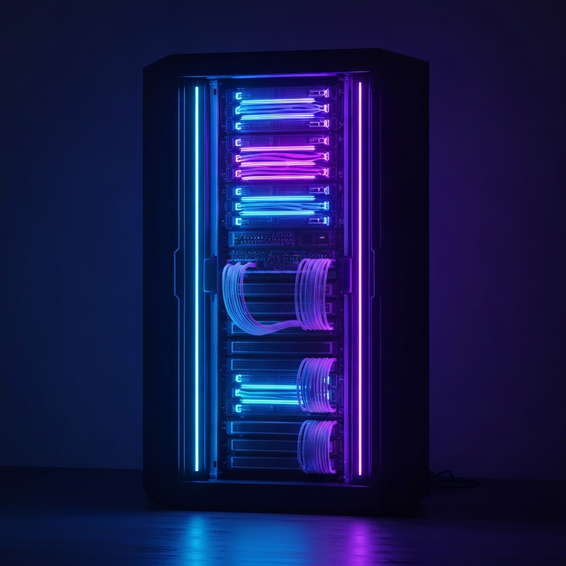
When advanced IT professionals decide to build a custom rackmount server, the standard rules fly right out the window. Supporting complex architectures requires high availability, a massive number of PCIe lanes, and serious storage bandwidth.
First on your checklist should be server-grade processors, such as the AMD Epyc or Intel Xeon Scalable lines. These heavy-duty CPUs deliver the massive core counts required for dense virtualization and clustered Kubernetes environments. Plus, they offer native support for ECC (Error-Correcting Code) RAM, an absolute must for maintaining strict data integrity across ZFS storage pools.
From there, you’ll want to focus heavily on your networking and storage backbones. To craft a genuinely future-proof 2026 build, look toward PCIe Gen 5 NVMe drives for lightning-fast caching and high-IOPS virtual machine storage. By pairing this incredibly fast storage with a dedicated 10GbE or 25GbE Network Interface Card (NIC), you’ll effectively eliminate data bottlenecks between your compute nodes.
Finally, don’t overlook the importance of GPU passthrough capabilities. With the current explosion of AI technologies, slotting in a dedicated Nvidia Tesla or a modern RTX card gives you the ability to run local machine learning models and handle hardware-accelerated transcoding directly from your server rack.
Best Practices for Your 2026 Homelab Environment
Getting the best performance out of your hardware takes more than just throwing money at expensive parts. It requires proper configuration and ongoing management to keep your homelab efficient, quiet, and completely secure over the long haul.
- Optimize Power Efficiency: Always keep an eye out for CPUs with a lower TDP (Thermal Design Power). By planning a power-efficient homelab architecture, you can keep your 24/7 idle power draw in check and avoid any nasty surprises on your electricity bill.
- Implement Network Segregation: Leverage hardware VLANs to carefully isolate your management interfaces, IoT devices, and public-facing web services. Taking this one step will drastically shrink your network’s attack surface and instantly boost your overall security.
- Prioritize Cooling and Noise Management: Got a server rack sitting near your living space? Do your ears a favor and swap out those screaming stock fans for whisper-quiet Noctua replacements. Making sure your chassis has proper airflow is also critical if you want to extend the lifespan of those pricey hard drives.
- Automate Backups and Redundancy: Never ignore the golden 3-2-1 backup rule. All hardware fails eventually, so it’s best to lean on automated software solutions—like Proxmox Backup Server—to seamlessly sync your critical data over to a secure, offsite cloud storage provider.
- Adopt Infrastructure as Code (IaC): Try managing your newly acquired hardware with tools like Ansible and Terraform. If you ever face a catastrophic hardware failure, an IaC approach lets you quickly rebuild and redeploy your entire environment from scratch.
Recommended Tools and Hardware Components
Looking to jumpstart your deployment? Here is a curated list of highly recommended hardware components tailored specifically for the ultimate 2026 server setup.
- Minisforum MS-01 Workstation – This incredible mini-server platform packs a serious punch, offering native 10G networking and surprisingly versatile PCIe expansion slots for such a small form factor.
- Crucial DDR5 ECC Memory Kits – High-speed, error-correcting memory that is absolutely essential for maintaining strict data integrity within advanced TrueNAS ZFS arrays.
- Seagate IronWolf Pro HDDs – When it comes to 24/7 media servers and personal cloud backups, these reliable, enterprise-grade drives are the gold standard for mass storage.
- Ubiquiti UniFi Pro Max Switches – This hardware acts as the perfect networking backbone, flawlessly routing high-speed 2.5GbE and 10GbE local traffic throughout your home.
Frequently Asked Questions
What is the best CPU for a homelab server in 2026?
Ultimately, the best CPU depends entirely on the specific workloads you plan to run. If you’re building a budget-friendly or media-focused setup, chips like the Intel Core i5 or Ryzen 5 processors offer a fantastic balance of core counts and power efficiency. On the flip side, enterprise-grade builds will benefit massively from AMD Epyc processors, which deliver unmatched PCIe lane expansion and raw core density.
How much RAM do I need for a 2026 homelab?
As a baseline rule, you should aim for an absolute minimum of 32GB of RAM just to handle basic Docker container hosting and straightforward file sharing. However, if you’re planning to run multiple virtual machines, a TrueNAS Scale environment, or local AI tools, stepping up to 64GB or even 128GB of DDR5 RAM is highly recommended to properly future-proof your system.
Should I use SSDs or HDDs for homelab storage?
In a well-rounded setup, you will likely need a strategic mix of both. It’s best to use ultra-fast NVMe SSDs for your operating systems, virtual machine boot drives, and container app data caching. Save the high-capacity spinning HDDs for bulk data storage tasks—think media files, automated daily backups, and your long-term family archives.
Conclusion
At the end of the day, building the best hardware for homelab server 2026 is all about striking a careful balance between raw compute power, long-term power efficiency, and future-forward technologies. As you continue to upgrade and expand your local network, keep your focus dialed in on PCIe Gen 5 compatibility, robust DDR5 memory capacities, and high-speed multi-gigabit networking.
Whether you decide on a compact cluster of low-power mini PCs or go all-in on a dedicated enterprise rackmount server, investing smartly in the right hardware today guarantees a smooth, reliable self-hosting experience tomorrow. So, start sketching out your new architecture now, and get ready to enjoy the ultimate localized cloud environment!
About the Author