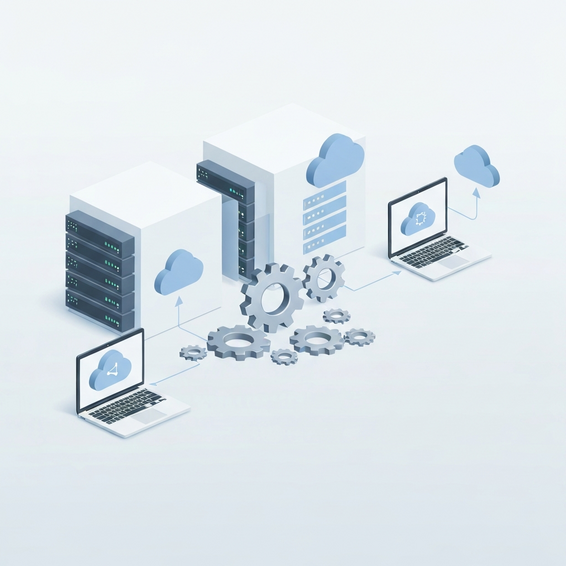
How to Manage Development Workflows Efficiently: Pro Guide
Ultimately, the success of a software project hinges on how seamlessly a team can write, test, and deliver code. Despite this, countless engineering departments still find themselves bogged down by frustrating bottlenecks, surprise merge conflicts, and the exhausting grind of manual testing.
When tasks lack clear organization, developer productivity naturally takes a hit, causing project velocity to stall. If you’re currently fighting to keep software delivery on schedule, mastering how to manage development workflows efficiently is absolutely vital. Not only will it help scale your output, but it also goes a long way in preventing team burnout.
Throughout this comprehensive guide, we’ll dig into the root technical causes of workflow friction. We’ll also walk through practical, actionable fixes and explore advanced DevOps strategies designed to completely streamline your pipeline.
Why Inefficient Development Workflows Happen
Before we jump straight into the solutions, it helps to understand exactly why development cycles break down in the first place. More often than not, inefficiency bubbles up from a combination of missing standard processes and less-than-ideal tooling choices.
A major technical culprit is the glaring absence of automated CI/CD pipelines. Whenever developers are forced to manually test and deploy code, human error will inevitably sneak in and disrupt things. The usual results? Broken builds, stressful emergency rollbacks, and a highly frustrated user base.
Messy Git version control is another massive hurdle. Without a strict, universally understood branching strategy, developers frequently end up overwriting one another’s work, which sparks headache-inducing merge conflicts. Furthermore, when team members operate in isolated silos, their local code bases drift too far from the main branch, turning integration into a total nightmare.
To complicate matters further, legacy monolithic architectures have a way of seriously stifling progress. If an entire application is housed inside a single, tightly coupled repository, one rogue bug holds the power to crash the whole system. Without isolated microservices or modular components in place, developers constantly step on each other’s toes, eventually reducing the code review process to a sluggish, painful bottleneck.
Quick Fixes for Immediate Workflow Improvements
To start untangling these issues, your team needs to lay down a few foundational ground rules. If you’re looking for a high-level summary of how to manage development workflows efficiently, here is what you need to focus on:
- Adopt a standardized Git branching model.
- Automate your testing via CI/CD pipelines.
- Enforce strict, consistent code review processes.
- Containerize your various application environments.
- Cultivate a highly collaborative team culture.
Should you want to drive noticeable improvements starting today, try rolling out these actionable steps. They’ll quickly boost team collaboration while bringing much-needed standardization to your output:
- Standardize Git Branching: Embrace established models like GitFlow or Trunk-Based Development. Doing so ensures every single contributor knows exactly where to commit their new features and bug fixes.
- Enforce Daily Standups: Keep collaboration levels high by utilizing quick, asynchronous updates. This simple habit prevents developers from quietly spinning their wheels on blockers for days on end.
- Automate Code Linting: Take advantage of pre-commit hooks (such as Husky) to handle code formatting automatically. You’ll quickly eliminate petty arguments over syntax during the code review phase.
- Limit Work in Progress (WIP): Put a cap on how many tickets a single developer can have open simultaneously. By forcing the team to cross the finish line on existing tasks before picking up new ones, you naturally enhance your overall agile development process.
- Use Conventional Commits: Require a strict, predictable format for all commit messages. Prefixes like “feat:”, “fix:”, or “chore:” make skimming the project history a breeze and even pave the way for automated changelog generation.
Advanced Solutions for Tech Teams
Once those basic habits are firmly in place, it’s time to analyze your workflow through an IT and DevOps engineering lens. Keep in mind that scaling a development team successfully demands robust infrastructure automation alongside incredibly strict quality gates.
1. Implement CI/CD Pipelines
For modern software teams, Continuous Integration and Continuous Deployment (CI/CD) pipelines are simply non-negotiable. Platforms like GitHub Actions or GitLab CI take the heavy lifting out of the equation by running unit tests automatically every time new code is pushed. If a test fails, the code stays blocked from merging, which beautifully protects the integrity of your main branch.
2. Containerize with Docker and Kubernetes
We’ve all heard the classic “it works on my machine” excuse, and it remains a massive drain on time. Containerizing your applications with Docker eliminates this entirely, ensuring your code behaves identically across local machines, QA testing servers, and live production environments. From there, Kubernetes can take things a step further by elegantly orchestrating those containers at scale.
3. Infrastructure as Code (IaC)
Relying on manual server configurations is a one-way ticket to environment drift and overall instability. Transitioning to IaC tools like Terraform or Ansible lets you clearly define your infrastructure using simple text files. Ultimately, this transforms server provisioning into a reproducible, version-controlled, and highly efficient operation.
4. Automated Environment Provisioning
Manually spinning up testing environments acts as a severe drag on the QA process. However, by adopting advanced deployment tools, your team can generate ephemeral environments completely on the fly. In this setup, the moment a developer opens a pull request, the system automatically provisions an isolated, dedicated staging server just for that feature.
The beauty of this approach is that product managers and designers can test features live in a real-world setting without twiddling their thumbs waiting for a unified staging deployment. Even better, once that pull request is approved and merged, the temporary environment destroys itself, effectively keeping your cloud computing costs in check.
Best Practices for Sustainable Cycles
Keep in mind that optimization isn’t merely about raw speed; it’s equally about moving securely. Building a truly sustainable workflow automation ecosystem demands a relentless focus on DevSecOps and a culture of continuous learning.
First and foremost, you need to practice “shift-left” security. This methodology involves baking security scans into the earliest stages of your development pipeline, rather than treating them as an afterthought during final audits. By implementing automated dependency scanning tools, developers are instantly alerted to potential vulnerabilities before their code ever gets merged.
Secondly, start tracking your DORA metrics. If you really want to understand the health of your DevOps culture, you must measure Deployment Frequency, Lead Time for Changes, Mean Time to Recovery (MTTR), and your Change Failure Rate. Tracking these specific metrics provides leadership with a clear, highly quantifiable view of overall team productivity.
Third, make observability a top priority. Implement centralized logging alongside robust application performance monitoring (APM). When a fire inevitably breaks out in production, your engineering team needs immediate, granular tracing capabilities to diagnose and fix the issue without entirely derailing their current sprint.
Finally, never underestimate the power of excellent documentation. Even the most brilliant workflow in the world is virtually useless if new hires can’t figure out how to trigger a simple deployment. Be sure to maintain a continually updated internal wiki that clearly maps out your Git branching model, deployment commands, and emergency incident response plans.
Recommended Tools to Boost Productivity
Leveraging the right software plays a monumental role in maintaining a healthy, agile development pace. With that in mind, here are a few highly recommended tools you might want to consider adding to your tech stack:
- GitHub Actions: An excellent choice for automating CI CD workflows right alongside your main source code repositories.
- Jira or Linear: Both are top-tier project management solutions specifically tailored for precise agile tracking and managing overall sprint velocity.
- Docker: Widely recognized as the industry standard for spinning up isolated, deeply predictable development environments that perfectly mimic production.
- SonarQube: A powerful, automated code review tool capable of detecting nasty bugs, security vulnerabilities, and code smells in your pull requests long before they merge.
- Terraform: An absolute essential for carefully mapping out and provisioning your cloud environments using reliable Infrastructure as Code (IaC) principles.
Frequently Asked Questions
What is a development workflow?
At its core, a development workflow is a clearly defined set of steps and processes that software teams follow to seamlessly write, test, review, and release new code. It encompasses everything from project management and version control to rigorous testing protocols and final deployment strategies.
How does CI/CD improve team collaboration?
CI/CD pipelines deliver immediate, purely objective feedback whenever a code change is introduced. By automating the testing phase, developers no longer have to blindly guess whether their latest commit will accidentally break the main branch. Consequently, this translates to drastically faster reviews, fewer subjective arguments, and significantly less friction among team members.
What is the best Git branching strategy?
While it depends on your specific setup, Trunk-Based Development proves highly effective for most agile teams. It strongly encourages developers to make small, frequent commits directly to a central branch, which dramatically minimizes those massive merge conflicts while keeping the release cycle both fast and reliably predictable.
Final Thoughts on Workflow Management
Let’s be honest: optimizing your engineering team’s output isn’t something that happens overnight. It truly requires a balanced mix of highly disciplined habits, crystal-clear communication, and an arsenal of modern automation tools to continuously refine the way you work.
However, by strictly enforcing code reviews, utilizing continuous integration, and standardizing your environments, you can actively eliminate the daily friction that slows your team down. Ultimately, knowing how to manage development workflows efficiently empowers your developers to focus their energy on what they actually do best: building amazing, impactful software.
Don’t feel pressured to boil the ocean; start small by automating your linting and testing today. From there, you can comfortably scale up toward full infrastructure automation at your own pace. Trust us—your future self, along with your entire development team, will undoubtedly thank you for it.
About the Author